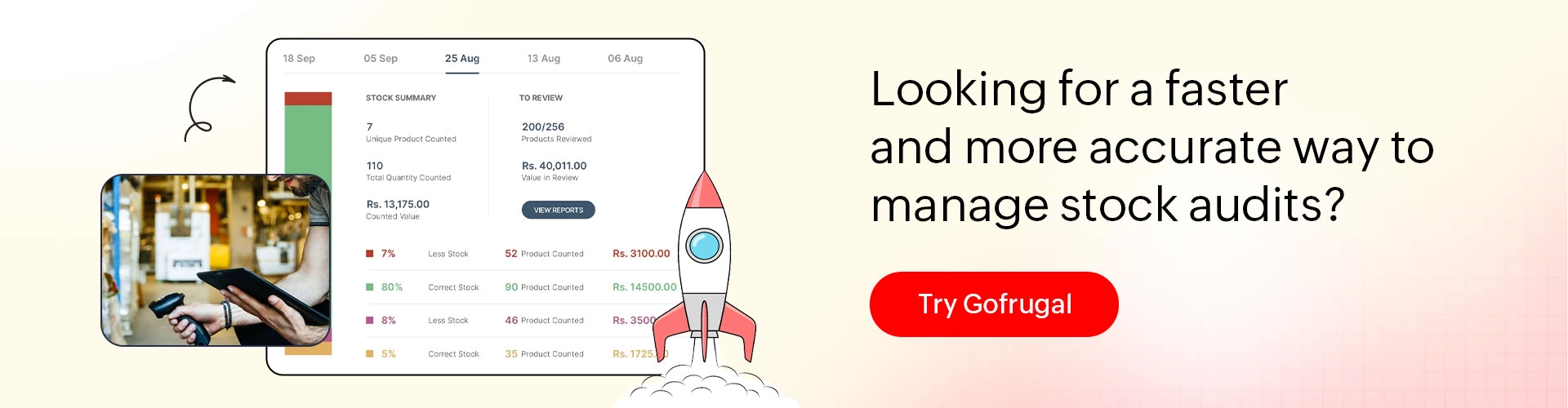
The stock audit is an essential operation in retail businesses that must be done periodically to ensure accurate stock and uninterrupted billing without stockouts. Often, retailers shut their doors for a few days or sometimes weeks to conduct stock audits in their store, causing lost sales opportunities and customer dissatisfaction.
Using digital tools for stock auditing ensures the stock count is done while the business is running so billing operations happen undisturbed and customers shop with confidence. This article summarizes the best practices, and offers important tips and a practical checklist for retails to conduct stock audits without halting billing.
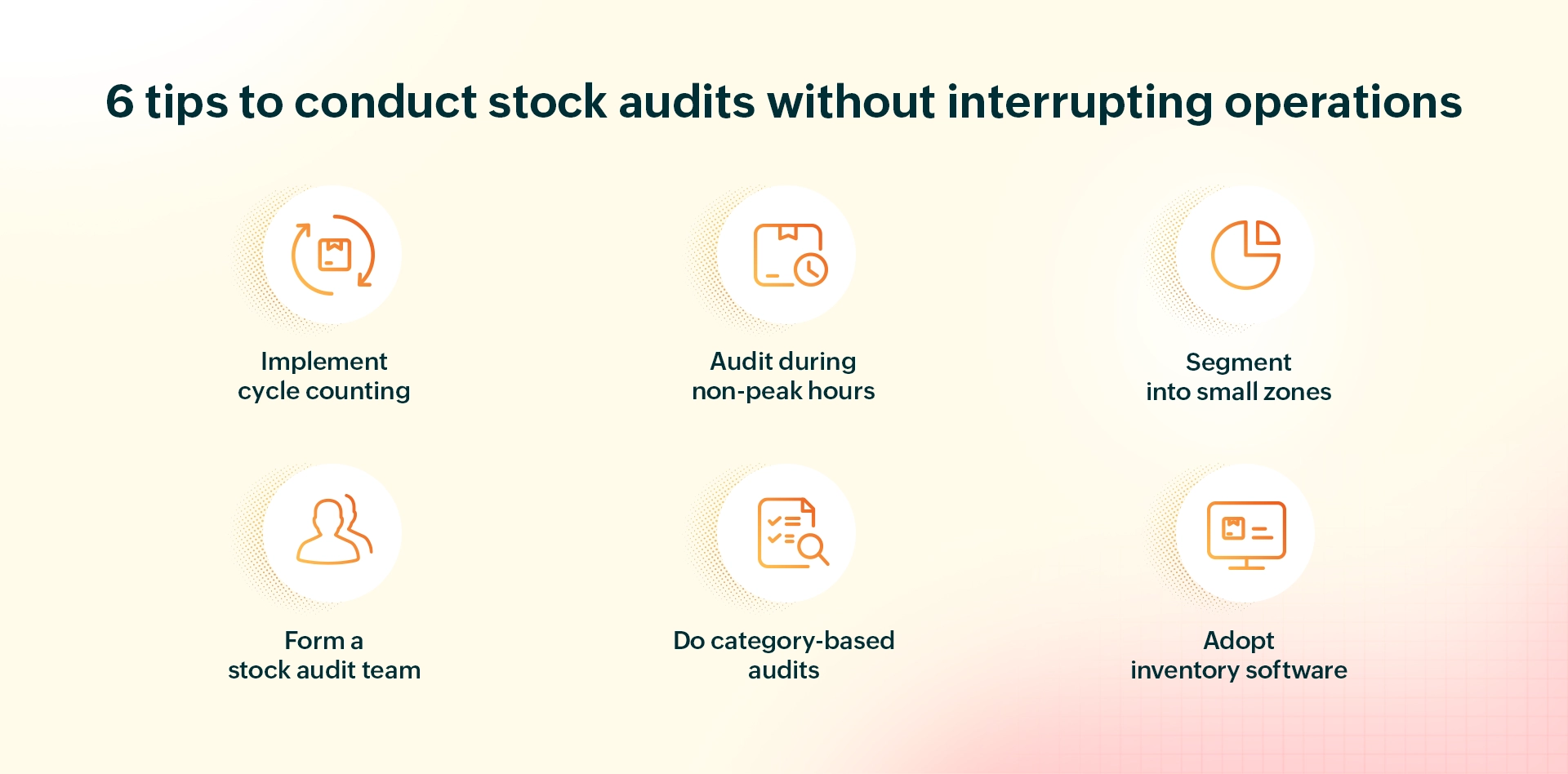
6 tips to conduct stock audits without interrupting operations
Retail is a competitive business that requires around-the-clock operations to keep customers coming to your store and to stay competitive. Shutting doors during stock audits is unnecessary and can lead to poor brand loyalty.
However, by implementing a few best practices, retailers can ensure stock audits happen without interrupting store operations. Here are a few strategies.
1. Audit in cycles instead of a full store audit
Break your entire inventory into small segments, do perpetual stock auditing on a daily or weekly basis, and repeat the process in cycles. In this way, you can keep your inventory accurate without disrupting store operations and distribute the workload evenly over a period.
2. Plan audits during non-peak hours
Schedule audits during non-business hours such as early mornings and late evenings, or other off-peak hours so that stock audits can be done without interrupting billing, order picking, material inwards, and other operations.
3. Segment store areas into small zones
Divide the entire store area into zones or bins. Freeze stock movement in specific zones and do stock auditing. Once the audit is completed, unfreeze this zone and move to the next, keeping the operations running as needed.
4. Assign a dedicated stock audit team
Cross-train staff on stock auditing processes and tools in addition to their designated roles. Form a small dedicated team during every audit and rotate the staff to keep everyone equipped, ensuring billing and backend operations run smoothly.
5. Perform audits based on category
Segment the store inventory based on category, plan one or a few categories per day in order of importance, and assign each category to a staff member for counting. This makes stock audit tasks easy, seamless, and quick without any chaos.
6. Adopt an inventory management system
The lack of real-time inventory syncs and mismatches between the system stock and physical stock are major reasons retailers close their stores during stock audits. To avoid this, implement a retail ERP that ensures real-time syncs for sales, purchases, inventory, and warehouse data.
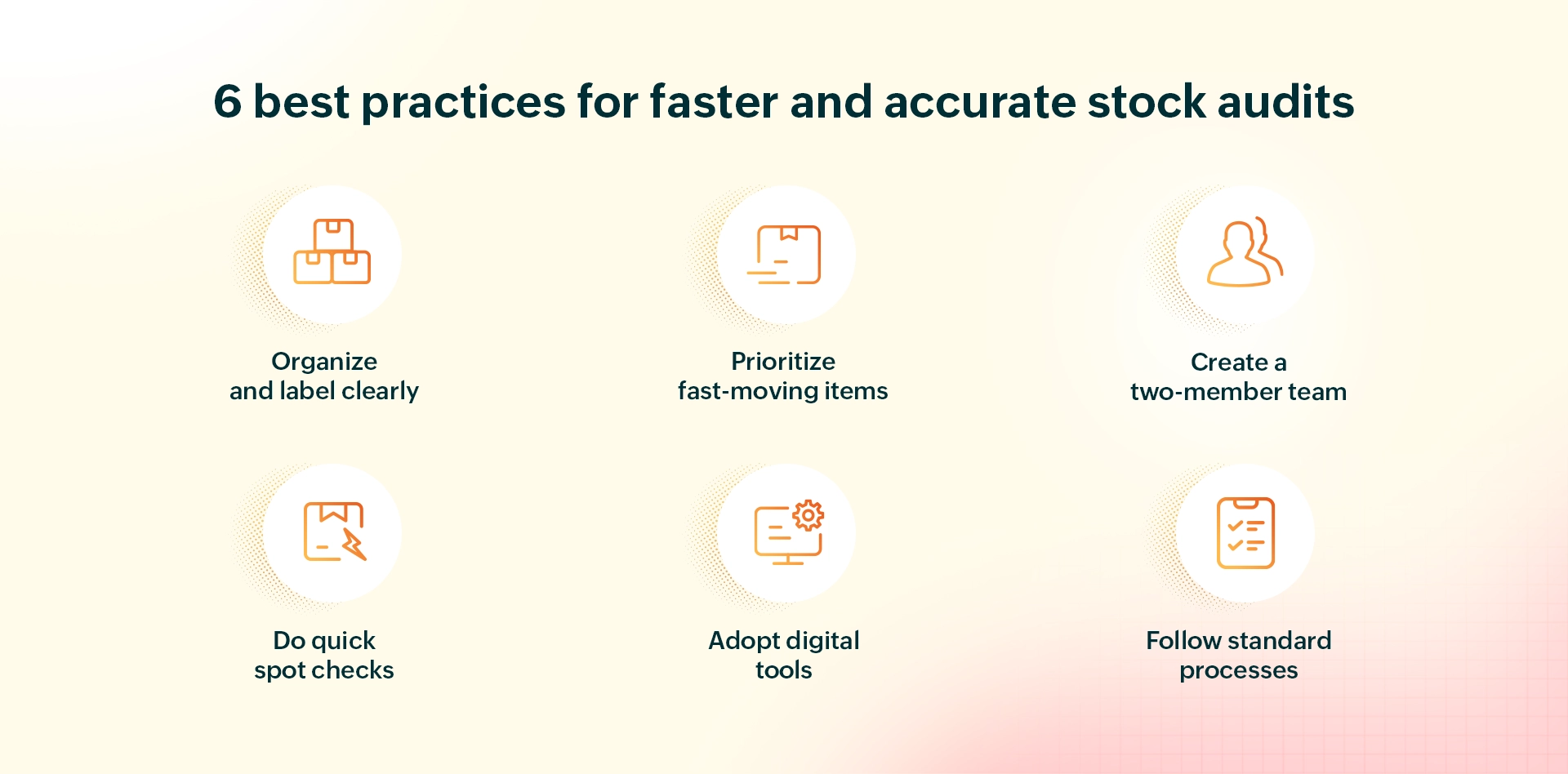
6 best practices for faster and accurate stock audits
1. Organize inventory with clear labeling
Arrange items in a structured way, group similar items based on item categories, and organize them on shelves with proper labeling. Clear labeling and structured storage helps locate items easily, complete stock counting faster, and avoid confusion during audits.
2. Prioritize fast-moving & high-value items
Implement ABC analysis on inventory. Audit fast-moving, high-value items (A class) more frequently than moderate moving (B class), and slow moving (C class) items. Regular checks on A-class items reduces efforts and improves stock accuracy.
3. Create a two-member team
Assign two staff for audits, one to do stock counting and another to validate the count with the system stock. Both working simultaneously ensures increased accuracy with two-step checks, and faster stock auditing with immediate stock correction.
4. Do quick spot checks on inventory
In addition to the planned audits, do a random stock audit on blind spots to identify stock discrepancies and correct them early. It helps keep staff vigilant, prevent stock losses, and maintain accurate inventory at all locations.gofru
5. Adopt digital tools for stock counting
Leverage tools like barcode scanners, RFID tags, and mobile inventory apps to scan products quickly and accurately. Integrating these tools with inventory management software ensures real-time inventory syncs, reduces errors, and increases transparency.
6. Define and follow standard processes
Allow material inwards only after making your goods receipt note (GRN) and never allow billing with negative stock in the system. Maintain accurate records of every sale and purchase transactions. Ensure stock reconciliation is done the same day as auditing.
Stock audit checklist for retailers
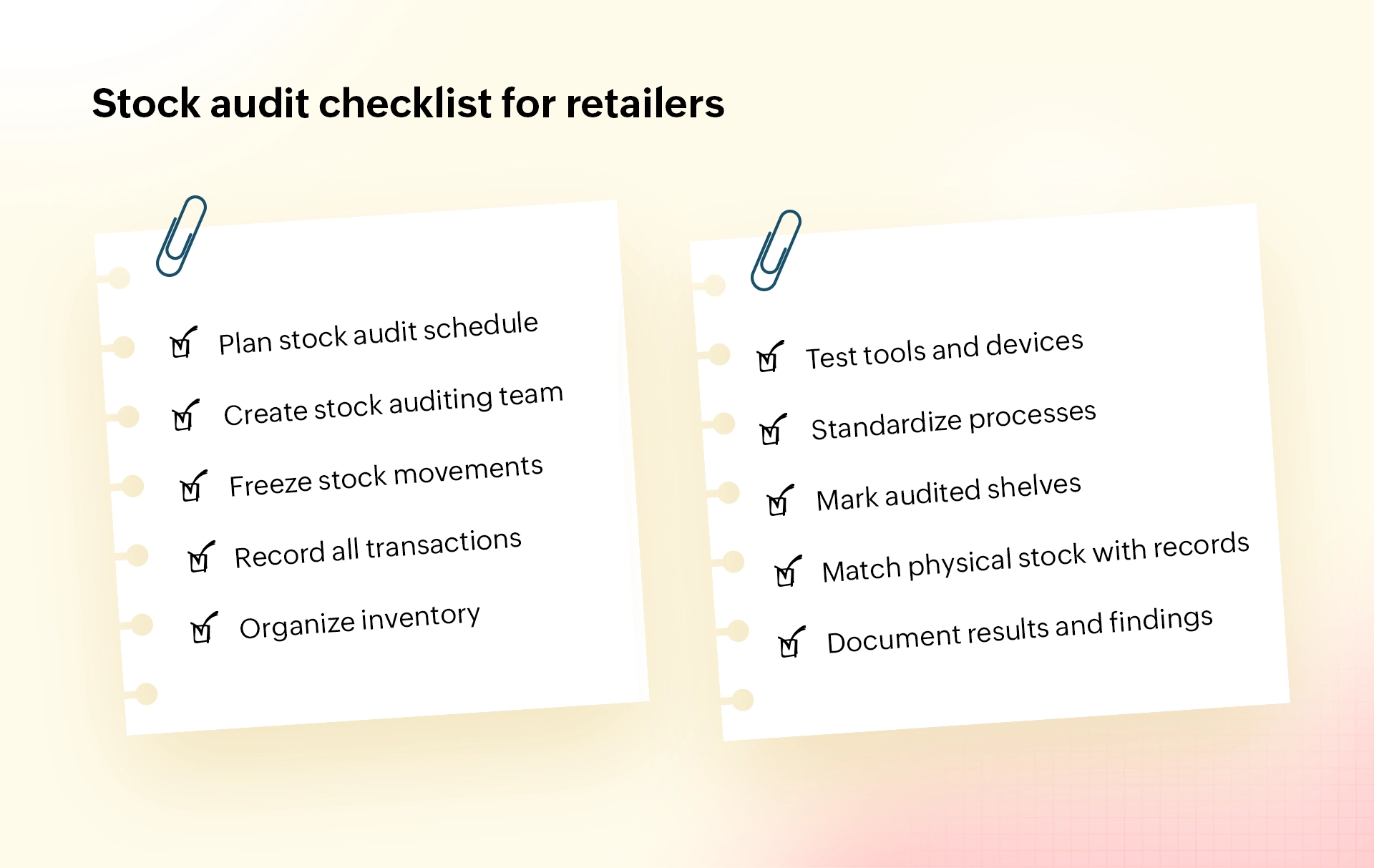
- Plan a stock audit schedule: Decide the audit dates, timing, locations/zones, and item categories at least 3–5 days in advance.
- Create a stock auditing team: Pick a few staff, and form a team, define their roles and responsibilities, and brief them on the plan and timeframe for the audit.
- Halt stock movements completely: Stop raising requests for new purchase orders, material inwards, repacking, and stock transfers one day before the audit.
- Record all transactions in the system: Make pending entries of sales, purchases, stock transfers, and returns in the system before starting the audit.
- Organize storage and label clearly: Arrange items on respective shelves, label bins and shelves, remove damaged or expired stock from shelves before counting.
- Test tools and devices in advance: Verify that barcode and RFID scanners are in working condition and full charged, software and mobile apps are updated to the latest versions, and Wi-Fi connectivity is strong.
- Standardize auditing processes: Train staff to follow a uniform stock counting process like left to right, top to bottom, etc. and record them with digital tools or apps.
- Label audited shelves and bins: Mark the counted shelves and bins as completed with markers, stickers, or labels to avoid duplicate counting.
- Validate physical stock with records: Compare the physical stock count with the system stock, then check for discrepancies, and reconcile stock data immediately in the system.
- Document results and findings: Prepare a stock audit summary, analyze the root cause of mismatches, document preventive actions to stop them, and submit the report for approval.
How Gofrugal simplifies the stock audit process
Stock audit during business hours
Do stock audits during business hours without halting billing; review discrepancies and reconcile stock immediately without any confusion. Enable accurate, quick, and simplified stock auditing with a barcode scanning-enabled mobile app.
Flexible stock audit assignment
Automate stock count rule assignments, assign stock audit tasks during staff's lean time, and segment counting based on category/supplier/location as per need to ensure increased efficiency.
Batch-wise inventory tracking
Monitor stock and expiry dates accurately with batch-wise inventory tracking and unique barcodes. Audit items, reconcile stock for appropriate batches, and liquidate items based on first-in, first-out for efficient stock control.
Accurate damage and expiry tracking
Count your stock of damaged and expired items in the flow without switching screens, sync them to the system immediately, and ensure correct stock of good quality items to plan the supplier purchases.
Real-time inventory sync
Monitor stock discrepancies, correct your stock, and ensure real-time inventory syncs with the centralized inventory management system after stock audits from any location.
By leveraging digital tools for stock audits, planning cycle counting based on ABC analysis, and keeping stock up to date, retail stores don't need to shut their doors for stock audits. Implementing these strategies ensures efficient inventory management, profitable purchase planning, and steady cash flow to keep the business running confidently.
Frequently asked questions
What is a stock audit?
A stock audit is the process of physically counting the inventory available in a store, and verifying it against the data recorded in the system. A stock audit is also called an inventory audit, stock taking, or physical stock verification.
Why are stock audits important for retail businesses?
Regular stock audits prevent stock shrinkage, provide reliable inventory data, and enable accurate purchase planning. It helps customers place orders online comfortably and ensures uninterrupted billing at counters without stock-out surprises.
How do traditional stock audits differ from modern stock audits?
Traditional stock audits | Modern stock audits |
| Audit done using pen and paper or spreadsheets. | Audit done using digital tools like barcode scanners, mobile apps, and software. |
| Requires closing the store or stopping the operations. | Stock counting can be done without closing the store or disrupting operations. |
| Error-prone due to mistakes in data entry, human errors, and stock verification. | High accuracy due to efficient modern solutions with real-time stock control. |
| Stock count conducted more frequently due to repeated stock mismatches. | Stock count done in cycles based on need with immediate stock reconciliation. |
| Larger team is formed for stock audits due to high workload. | A small dedicated team is enough for stock auditing. |
What is the difference between a full stock audit and cycle counting?
Full stock audits involve counting the entire store inventory at once while cycle counting involves verifying small segments of inventory such as select items, item categories, or locations based on stock movement and importance.
A full stock audit is done every six months or once a year with a larger audit team for comprehensive planning and minimal disruption to store operations. Cycle counting is done on a daily or weekly basis throughout the year with a small dedicated team, minimal planning, and without interrupting store operations.
How often should retailers conduct stock audits?
The frequency of stock audits can vary based on your business size, the number of SKUs handled, and stock movement. Regular stock audits are essential for accurate stock data.
- Daily or weekly stock auditing is a must for fast-moving, high-value items.
- Fortnightly or monthly stock checks can be done for high-value but moderate-moving items.
- Quarterly auditing can be done for slow-moving items in the store.
- Biannual or annual full-store stock auditing is mandatory to verify data and plan the inventory for the upcoming year.
What are the common causes of stock mismatches in retail stores?
Stock mismatches happen due to:
- Unrecorded sales, purchases, and material inwards
- Manual data entry errors
- Delayed inventory updates
- Thefts and data misappropriation
- Billing and scanning errors
- Unrecorded damaged and expired items
- Unaccounted returns and exchanges
- Unclear labeling and storage practices
How can technology help simplify stock audits?
Modern technology adoption such as barcode scanners, RFID technology, and mobile stock auditing apps ensure quick and accurate stock audits with minimal efforts. Using an inventory management system provides real-time inventory tracking, helps identify stock discrepancies, and reconciles mismatches quickly.
Integrating an inventory system with a retail ERP centralizes inventory data, ensures accurate stock flow for sale and purchase transactions, and provides comprehensive analytics for informed decision-making. Adopting AI and demand forecasting tools, increases efficiency and accuracy in demand forecasting and stock management.