How POS-powered recipe & inventory management transforms restaurants
Bridging the profit gap! Restaurant profitability depends on a seamless connection between two core back-of-house operations: recipe management and inventory control. When this link is broken, operational inefficiencies and financial losses become inevitable.
Try Gofrugal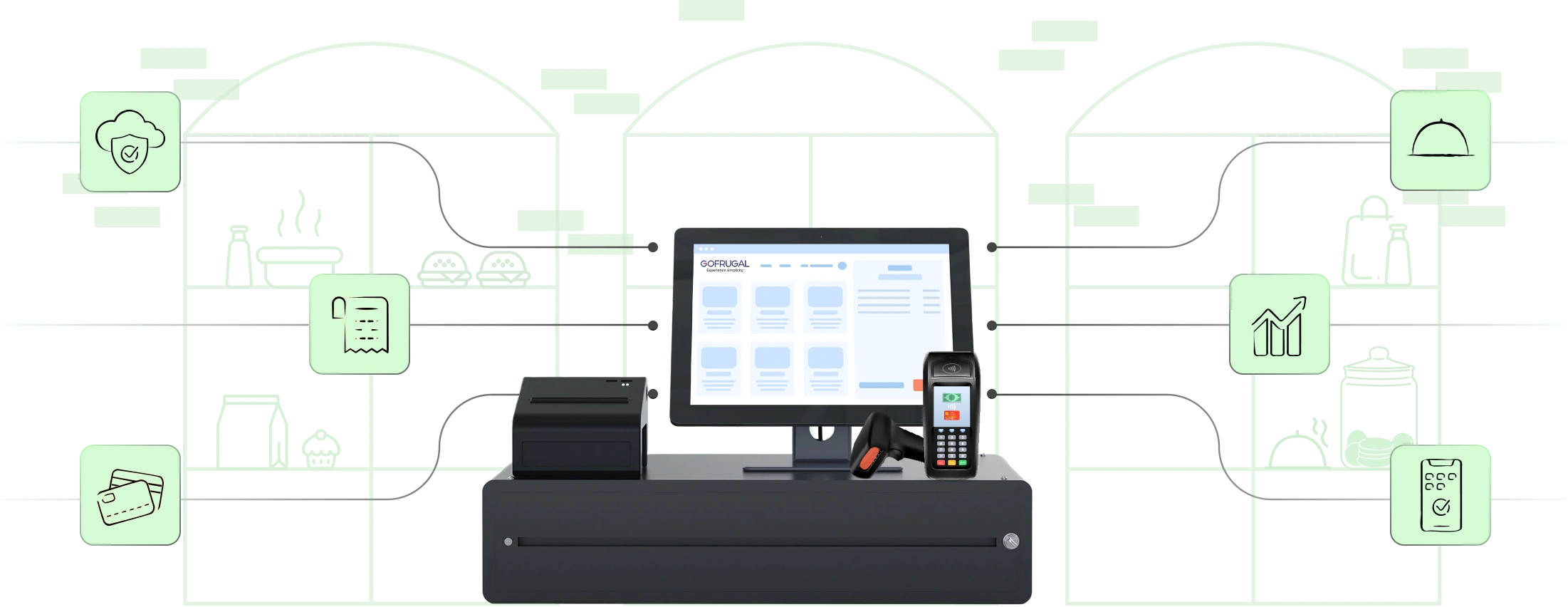
Highly rated and trusted by customers!




Key features
Key takeaways
- Recipes directly influence stock usage, cost, and waste.
- Reduce cost variance and waste with real-time tracking and smarter purchasing.
- Centralized recipe control and stock management helps multi-outlet businesses.
Top challenges in recipe & inventory management
- Difficulty in tracking actual vs. planned ingredient use.
- Frequent stockouts or overstocking due to inaccurate forecasting.
- Portioning inconsistencies, menu, and pricing complexities.
How integrating recipe & inventory management can boost restaurants revenue?
1. Recipe standardization
The initial step in establishing the link between a recipe and inventory is to create and configure recipes for each item available on the menu in your software. This step involves defining each ingredient and its quantity needed for a particular dish to be prepared. For any item that has more than one ingredient, a recipe configuration should be done in your software.
Benefit: Standardizing the recipes at the software level helps restaurateurs ensure consistency in taste, portion size, and quality every day.
2. Automated stock deduction
Once the recipes are created, the dishes are ready to serve. Every time a dish is billed at the counter or ordered at the table, the specific group of ingredients mapped to those dishes will automatically be deducted from the store inventory by the software. This process is configured in the inventory management software and doesn't involve any manual intervention.
Benefit: The automatic stock reduction based on real-time consumption helps restaurateurs with real-time updates on inventory as each dish is prepared.
3. Food cost & menu pricing
The key to running a profitable food business is to keep track of the overall food cost of the establishment; the lower the food cost, the higher the margin and the higher the profit. A dedicated food costing software can accurately calculate the cost incurred to prepare each recipe on the menu, track overhead and hidden expenses, and automatically adjust to the price changes of raw materials when the purchase is made. Optimizing your menu based on food costing is crucial in fixing the price for each dish available in the menu.
Benefit: Careful food cost calculation and tracking and keeping them under control directly results in better profit margin control and optimized pricing strategies.
4. Batch & expiry management
Stock mismanagement leads to spoilage and revenue loss. With integrated recipe and inventory management, ingredients are tracked by batch number, manufacturing date, and expiration date. The production of these recipes happens in a structured way to ensure each ingredient is used from the right batch. In this way the system automatically suggests using older stock first (FIFO/FEFO), ensuring minimal waste. Product alerts can notify staff about ingredients nearing expiry, preventing costly mistakes.
Benefit: Managing the inventory in batches for both ingredients and finished goods helps reduce waste, improves food safety, and gives the flexibility of traceability in case of quality issues.
5. Centralized control for multi-outlets
For restaurants operating multiple outlets or a central kitchen, recipes can be created, updated, and standardized centrally, ensuring uniformity across all branches. The inventory and production data from all outlets flows into one dashboard, giving a bird’s-eye view of stock movement. With inter-location stock transfer, central kitchens can distribute ingredients to specific outlets based on recipe requirements across outlets. Procurement can also be consolidated and handled as a whole for all outlets, reducing purchase cost and chaos.
Benefit: By centralizing such crucial back-office operations, a food business can attain consistency across outlets, reduce procurement costs, and scale effortlessly.
How Gofrugal helps restaurant owners manage inventory & recipes?
Gofrugal offers an integrated, one-stop restaurant management suite that brings recipe management and inventory control together. Our solution moves beyond basic POS by providing an extensible ecosystem created to push profitability and operational efficiency to the next level.
- Integrated recipe and menu engineering Establish, organize, and standardize all your recipes in a centralized software. Determine accurate production and food costs with a bill of materials (BOM) to create a menu with maximized profitability.
- Real-time inventory management Gofrugal inventory management tools monitor stock levels in real time, create automated reorder points, and handle batches and best-before dates to prevent spoilage.
- Omnichannel order management Process orders from dine-in, takeout, and food aggregators on one platform. Inventory is updated in real time with each sale, offering total visibility and control.
- Centralized management for chains For multi-outlet operations, Gofrugal provides uniform recipes, pricing, and inventory transfers for all outlets from a centralized platform.
- Intuitive and offline-friendly Our cloud system is straightforward for your staff to use, and our offline capability allows billing and data synchronization without interruptions, so your counter billing never halts.